Bedding · Materials & care
Bovi Cotton Sateen: Understanding Weave, Finish and Care
Cotton sateen is often described in terms of what it resembles: silk, polished stone, the cool, smooth sheets of a well-run hotel. But its particular appeal begins with something more practical—the way its threads cross, the quality of the cotton, and the habits that preserve it once it comes home.
There is a small ceremony to getting into a freshly made bed. A hand passes over the duvet cover; the fabric falls into place; light catches, or does not catch, its surface. The room may be unchanged, the mattress unchanged, and the hour late. Yet the bed seems to have acquired a new temperament. In bedding, this transformation is often credited to thread count, a number that behaves in conversation like a shorthand for quality. But the number is only one detail in a more interesting story: the story of fibre, weave, finishing and care.
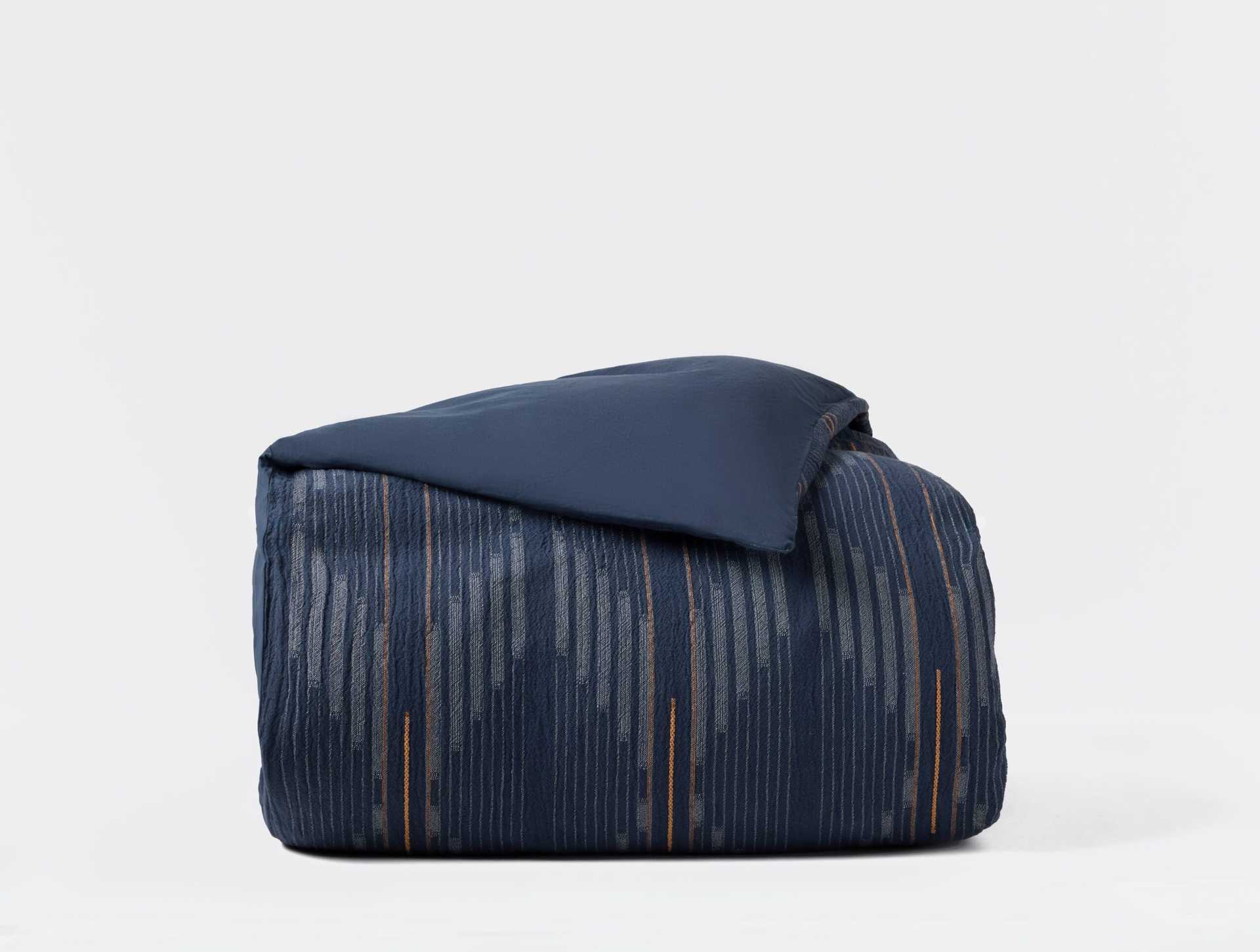
Cotton sateen is prized for its smooth hand and gentle sheen. It appears in several Bovi cover designs, where the fabric’s character is balanced by restrained details: a contrast border, embroidery, or an uncluttered white ground. The effect is polished without necessarily being formal. To understand why, it helps to separate sateen from the broader category of cotton, and to distinguish the structure of the weave from the finish that gives a fabric its final feel.
That distinction matters when comparing bedding for everyday use. Two covers can both be cotton, both carry a high thread-count figure, and still feel quite different against the skin. One may feel crisp and cool; another smooth and fluid. Neither is automatically better. The useful question is which combination of qualities suits the sleeper, the room and the routines that will follow the purchase.
What “sateen” means
Sateen is a weave, not a fibre. The word describes how yarns are arranged: in a typical sateen construction, warp threads pass over several weft threads before going under one. This creates a relatively smooth surface, with fewer yarn interlacings visible on the face of the cloth than in a plain weave. The longer exposed sections of yarn reflect light more evenly, producing sateen’s characteristic soft lustre and supple drape.
That structure is easily confused with satin, a name often associated with a similarly sleek appearance. Satin usually refers to a weave made with filament fibres such as silk or manufactured fibres, while cotton sateen is made with spun cotton yarn. The shared word is a clue to the surface effect, not proof that the fabrics are identical. Cotton sateen retains the familiar substance of cotton while offering a smoother, more luminous face than many plain-weave cotton fabrics.
Percale provides the useful comparison. It is generally woven with a simple one-over, one-under structure, which gives the cloth a crisp, matte hand. Sateen’s longer floats—the yarn sections that travel over multiple threads—make its surface feel smoother and its drape more relaxed. The difference is not merely visual. A sleeper who likes the clean, freshly laundered feel of a hotel sheet may gravitate towards percale; someone who prefers a softer, more fluid surface may find sateen more inviting.
Neither weave guarantees a particular temperature or level of comfort. Fibre, yarn, fabric weight, room conditions and personal preference all contribute. A smooth sateen surface can feel especially pleasant to someone who dislikes a crisp texture, but warmth is not determined by the weave alone. It is more useful to think of weave as one part of the bedding’s character than as a promise of a specific sleep experience.
The cotton beneath the finish
A weave can only do so much with the yarn put into it. Cotton quality influences the uniformity, strength and surface of the finished fabric. Longer cotton fibres, often described as long-staple or extra-long-staple, can be spun into smoother, stronger yarns than shorter fibres. In a well-made cloth, that can contribute to a more even feel and help the fabric withstand repeated use. It does not make every other cotton inferior, nor does a fibre label by itself tell the whole story: spinning, weaving, finishing and construction remain part of the result.
Bovi’s cotton sateen offerings include different specifications and design approaches. The Windsor cover, for example, is described as 100% cotton sateen at 300 thread count, with a crisp white ground and a contrasting border. Other Bovi designs use sateen at higher stated thread counts or introduce embroidery, flanges and other finishing details. Such specifications can help a reader compare fabrics, but they should be read as descriptions rather than verdicts.
Thread count records the number of threads in a square inch of fabric, though conventions for counting can differ. It can be relevant when comparing fabrics made in similar ways, but a larger figure is not a universal measure of softness, durability or comfort. Yarn thickness, fibre quality and construction affect how much information that figure carries. A very high number may sound impressive on a label while telling little about whether the fabric suits a particular sleeper.
It is also worth asking what kind of experience the specification is meant to describe. A 300-thread-count sateen may feel smooth and drapable; a different fabric with a larger number might feel heavier, firmer or less airy. The number cannot substitute for the weave, the cotton and, where possible, a tactile assessment. In a comparison, look at the whole description: fibre, weave, thread count, finish, closure and care instructions. A fabric is not a mathematical trophy.
Finish: the fabric’s final manners
Finishing is the set of processes that give cloth its final appearance and handle. Depending on the fabric and maker, these can affect softness, sheen, smoothness, colour and stability. The phrase “cotton sateen” therefore describes a useful starting point, not every sensation the fabric will offer. A particular finish may make the surface feel more polished, while the fabric’s weight and construction determine how it drapes across the bed.
On Bovi bedding, finish also includes the visible details around the fabric. Windsor’s contrasting border makes an otherwise simple white cover feel tailored. Other designs may use embroidered lines, a flange or a tonal pattern to add definition. These details do not change the basic nature of sateen, but they influence the way it reads in a room. A narrow border can make the bed look orderly; a more pronounced decorative edge can make the cover feel like the centre of the scheme.
Colour and light have their own part in the performance. Sateen’s subtle lustre can appear stronger in bright daylight and softer in a shaded room. White and ivory often make the sheen more noticeable; a deeper or more complex colour may render it quieter. This is one reason product descriptions and photographs can be incomplete guides to appearance. Lighting, surrounding colours and the angle from which the fabric is seen all change its impression.
Finishing details also affect how a duvet cover behaves in daily life. Button closures and internal ties, for instance, serve a practical purpose: they help keep the duvet aligned and make the bed easier to arrange. The cover’s seams and hem influence its structure at the edges. These may seem minor next to a thread-count figure, but they become conspicuous during the ordinary business of changing the bed, washing the cover and pulling it back into shape.
Choosing between sateen and percale
There is no need to turn the choice into a contest. Sateen and percale are different solutions to a question of preference. One offers a smoother, gently lustrous face; the other tends towards a crisp, matte hand. The better choice is the one that feels comfortable over a full night, not the one with the most persuasive description.
- Choose sateen if you enjoy a smooth surface, a soft drape and a quiet sheen, or if you prefer bedding that feels less crisp to the touch.
- Consider percale if you like a cool, structured hand and a matte finish, or if the classic crispness of plain-weave cotton is part of what makes a bed feel inviting to you.
- Look beyond the weave if you have strong preferences about fibre origin, certifications, weight, colour, decorative details or laundering.
Temperature comfort, too, is individual. Some people associate a smooth sateen surface with a cosier sensation; others prefer the crispness of percale. The bedroom’s temperature, the duvet’s fill and warmth, and personal sleep habits may matter as much as the cover. If overheating is a concern, consider the complete sleep setup rather than expecting a duvet cover alone to solve it.
For a Bovi cover, it is useful to read the product specification as a small map. Fibre and weave explain the fabric’s general character. The finish and design describe its appearance. The closure and ties tell you how the cover is assembled. The care label is the best guide to what it can tolerate in the wash. Together, these details offer a more reliable picture than any single adjective or number.
Care: preserving the surface
Cotton sateen is made for use, but repeated washing places stress on any textile. The most reliable care advice is the instruction supplied with the specific cover. Water temperature, cycle, detergent and drying guidance can vary with fabric construction, colour and finishing. When descriptions differ, the sewn-in care label should take precedence over general rules.
As a sensible starting point, sort bedding by colour and wash it with similar items. Avoid overloading the machine: cloth needs room to move through the water, and an overfull drum can encourage creasing and uneven cleaning. Use a suitable detergent in an appropriate amount. More detergent does not necessarily mean a cleaner result; residue can leave fabric feeling less pleasant and may require an additional rinse.
High heat can be hard on cotton and may contribute to shrinkage, fading or wear, depending on the fabric and the instructions. Where the care label permits, a gentler drying approach is usually preferable. Removing the cover promptly can reduce deep creases. If ironing is desired, follow the maker’s guidance and avoid applying excessive heat to embroidery or other decorative details.
Fabric softener is not a mandatory part of laundering. It can leave a coating on some textiles and is not required simply because a fabric is cotton. A measured detergent dose, a suitable wash cycle and thorough rinsing are often more useful foundations. For any special finish, colour or embellishment, the individual care instructions matter more than a universal routine.
It is tempting to think that a more elaborate fabric requires elaborate treatment. Often the more useful discipline is consistency: wash it when needed, avoid harsh conditions, and store it clean and fully dry. A duvet cover also protects the insert from direct contact with everyday dust and body oils, making it practical to launder the cover separately at a reasonable interval. The frequency will depend on household habits, season and personal preference.
A practical comparison checklist
When comparing cotton sateen bedding, a short checklist helps keep attention on the details that will matter after the first night:
- Fibre: Is the cover made from cotton, and does the description specify a staple length or other relevant fibre detail?
- Weave: Is it sateen, percale or another construction? What kind of hand and appearance does that suggest?
- Thread count: Is the number given alongside enough information to make a meaningful comparison, rather than standing alone as a claim?
- Finish and design: Is the surface plain, printed, embroidered or framed by a border? Will those details suit the room and the way the bed is made?
- Construction: Check seams, closure and internal ties. These are the details that keep the cover functional between laundry days.
- Care: Confirm the washing and drying instructions, especially if you prefer low-maintenance bedding or have limited drying space.
- Fit: Check that the cover dimensions and closure arrangement suit the duvet insert you already own.
This is not a test with a single winning answer. It is a way to prevent attractive terminology from doing all the thinking. A beautiful border may be exactly what a room needs; a high thread count may be a useful point of comparison; a particularly soft hand may matter more than either. The proper order is to identify the qualities you value, then see whether the specification supports them.
The quiet luxury of knowing what you like
“Luxury” in bedding is often asked to carry too much meaning. It can refer to a costly fabric, a smooth finish, careful construction or the pleasure of a bed that feels composed at the end of a long day. Those ideas overlap, but they are not interchangeable. A fabric’s price cannot tell you whether you will enjoy its texture; a thread count cannot guarantee a good night’s sleep; a polished surface cannot replace the practical value of a cover that is easy to care for.
Cotton sateen earns its place in the bedding vocabulary through a clear set of qualities: a smooth hand, a soft lustre and an elegant drape. Bovi designs show how those qualities can be shaped by different thread counts, finishes and decorative treatments. A crisp white ground with a contrasting edge makes one kind of statement; embroidery or a tonal detail makes another. The underlying fabric remains part of the story, but it is never the whole story.
In the end, choosing cotton sateen is less like selecting a specification and more like learning a preference. Notice whether you reach for a cool, crisp sheet or a smoother one. Pay attention to how a fabric behaves after washing, and whether its care routine fits the life you actually lead. Compare weave and fibre, but leave room for the simplest evidence: how the bedding feels when the lights are out and the day has finally stopped making demands.

